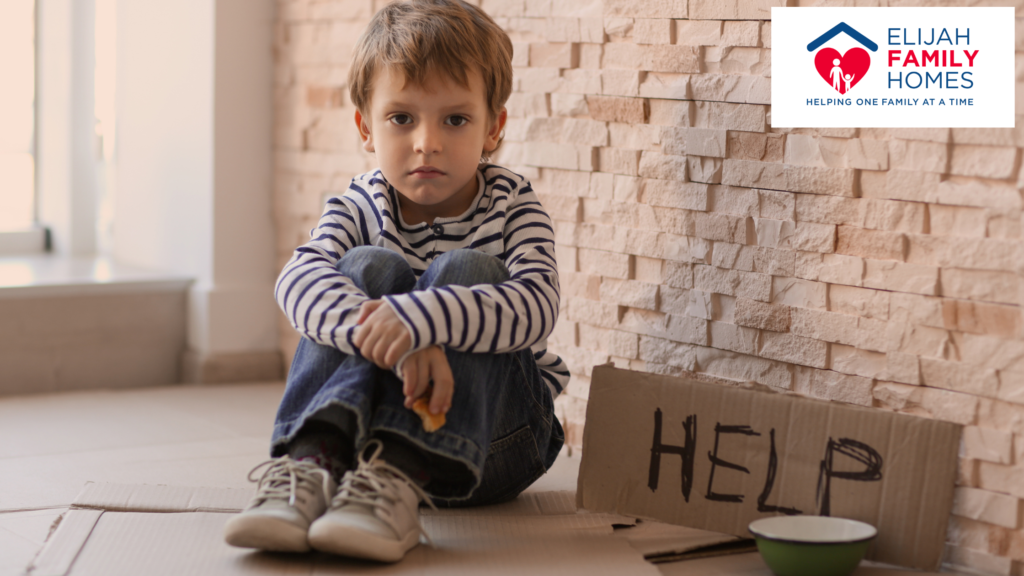
When families experience homelessness, the hardest impact is often carried by the children. Instability, missed school, trauma, and exposure to unsafe environments can shape a child’s future in ways that last a lifetime.
At Elijah Family Homes (EFH), we believe the right support at the right time can change that story. When you support EFH, you are not just helping parents in recovery—you are helping children step into stability, opportunity, and hope through transitional housing and long-term support.
Why Transitional Housing Matters for Families in Recovery
Transitional housing provides more than a roof over a family’s head. It offers safety, structure, accountability, and access to services that help parents rebuild their lives after addiction or crisis.
For families in transitional housing, it means:
- Consistent and safe housing
- Case management and recovery support
- Parenting education and life skills training
- Support navigating employment, childcare, and education
This stability gives parents the space they need to focus on recovery—while giving children the consistency they need to grow, learn, and feel safe.
The True Cost of Homelessness vs. the Power of Supportive Housing
Homelessness is not only devastating for families—it is also extremely costly for communities.
Studies show:
- A chronically homeless individual can cost over $35,000 per year in emergency services, law enforcement, and healthcare.
- High-use individuals with severe needs can cost $100,000+ per year.
- Emergency room visits alone can average $18,500 to $44,000 per person annually.
- Criminalizing homelessness can exceed $31,000 per person per year.
In contrast, providing supportive and transitional housing costs approximately $12,800 to $13,000 per year—and produces far better outcomes for families and communities.
At EFH, the average cost to support a family in the TTS program is between $10,000 and $13,000 for the entire year. That investment doesn’t just reduce crisis spending—it builds long-term stability.
A 96% Graduation Rate Means Real Change for Children
EFH’s TTS program has a 96% graduation success rate. That means families are not just temporarily housed—they are moving forward into independent, stable living.
For children, this success rate means:
- Fewer school disruptions
- Better emotional stability
- Exposure to healthy relationships and routines
- Access to new opportunities they may never have had before
When parents step away from addiction and into recovery, children experience a powerful shift. They begin to see what stability looks like. They learn that change is possible. And they gain the chance to follow a completely different life path than the one shaped by crisis.
This is how generational cycles of addiction and homelessness are broken—not just by housing, but by community-supported recovery.
Transitional Housing Builds Stronger Communities, Not Just Safer Homes
When families succeed, entire neighborhoods benefit.
Children thrive in school.
Parents become part of the workforce.
Healthcare and emergency systems face less strain.
Communities become safer and more connected.
Supporting transitional housing is one of the most effective ways to invest in long-term community health. It shifts resources from crisis response to prevention and growth—and it gives families the dignity and tools to build their own success.